How to Light a Room: A Practical Guide
Most rooms have one too few lamps. Here's how to fix yours.

This article contains advertisement
On this page
How to Light a Room: A Practical Guide
Lighting is the most under-thought decision in most homes. People spend weeks choosing a sofa and minutes choosing the bulb above it — even though the bulb will shape how that sofa feels every evening for the next ten years.
The good news: you don't need to be a designer to get this right. You need a framework, and a willingness to add a few more lamps than you think you need.
The Four Layers
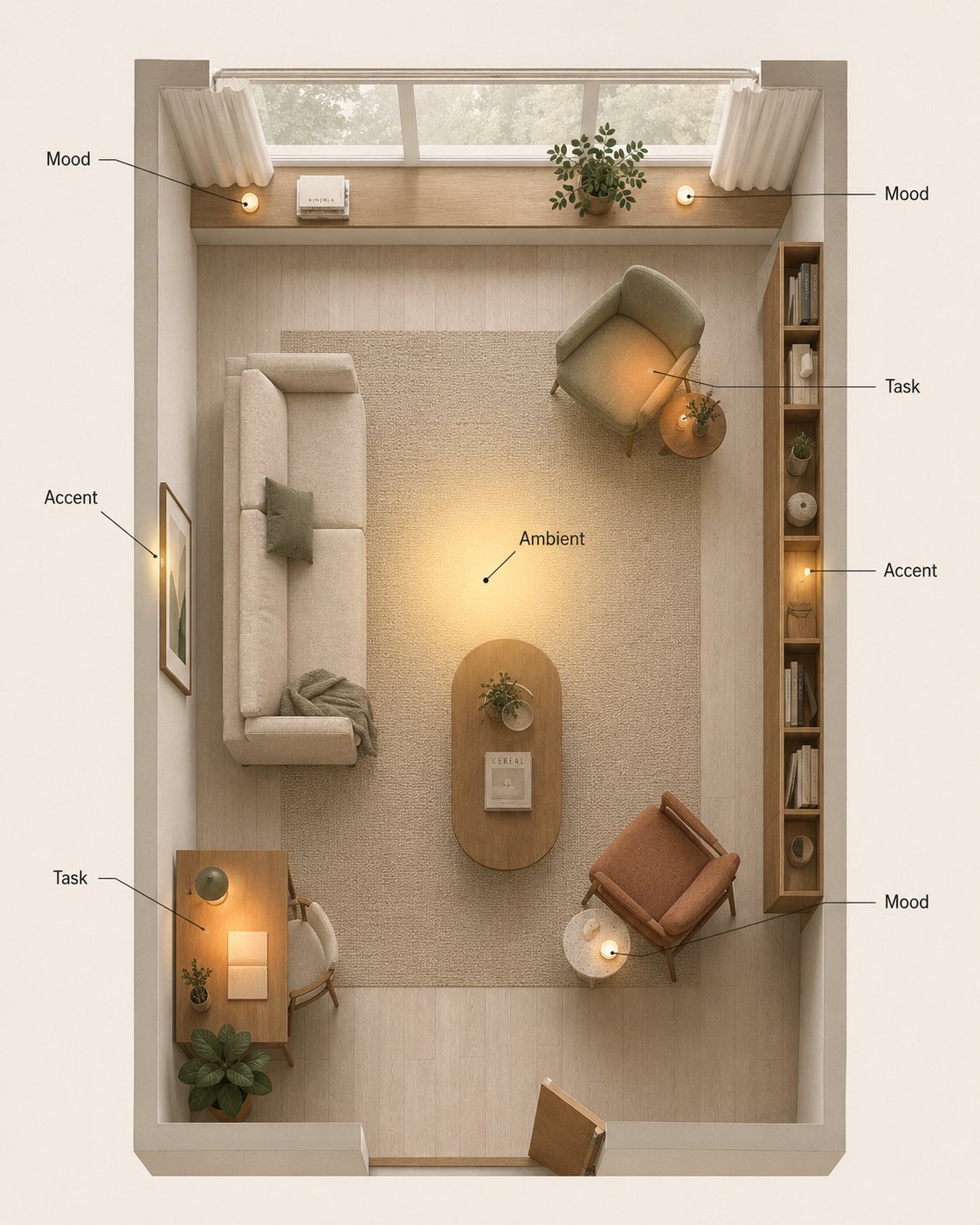
Every well-lit room combines four layers. Get the mix right and the room works at any time of day.
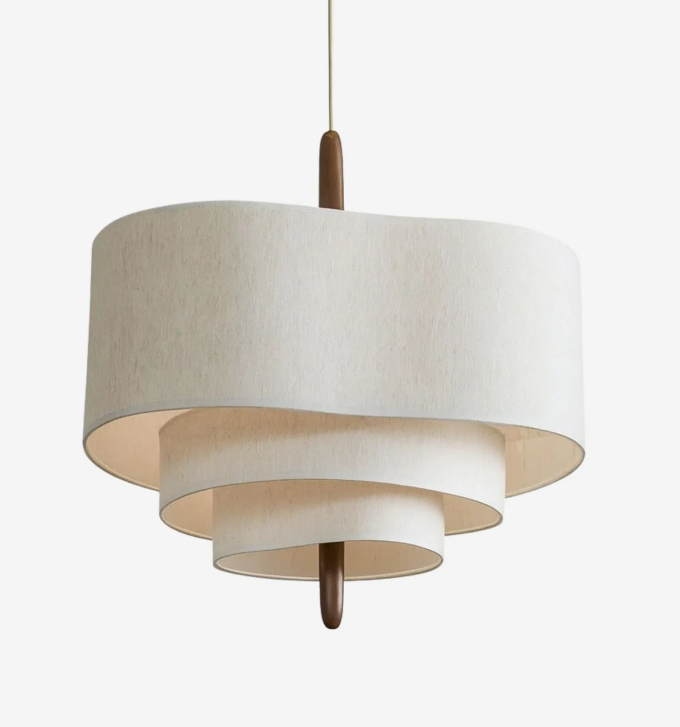
1. Ambient light — the base layer that lets you move around safely. Usually a ceiling fixture or pendant. This is the one most people stop at, which is why most rooms look flat.
2. Task light — focused light where you actually do something: a reading nook, the kitchen counter, the desk, the bedside.
3. Accent light — directional light that highlights a specific thing: a piece of art, a bookshelf, a textured wall. This is what gives a room depth.
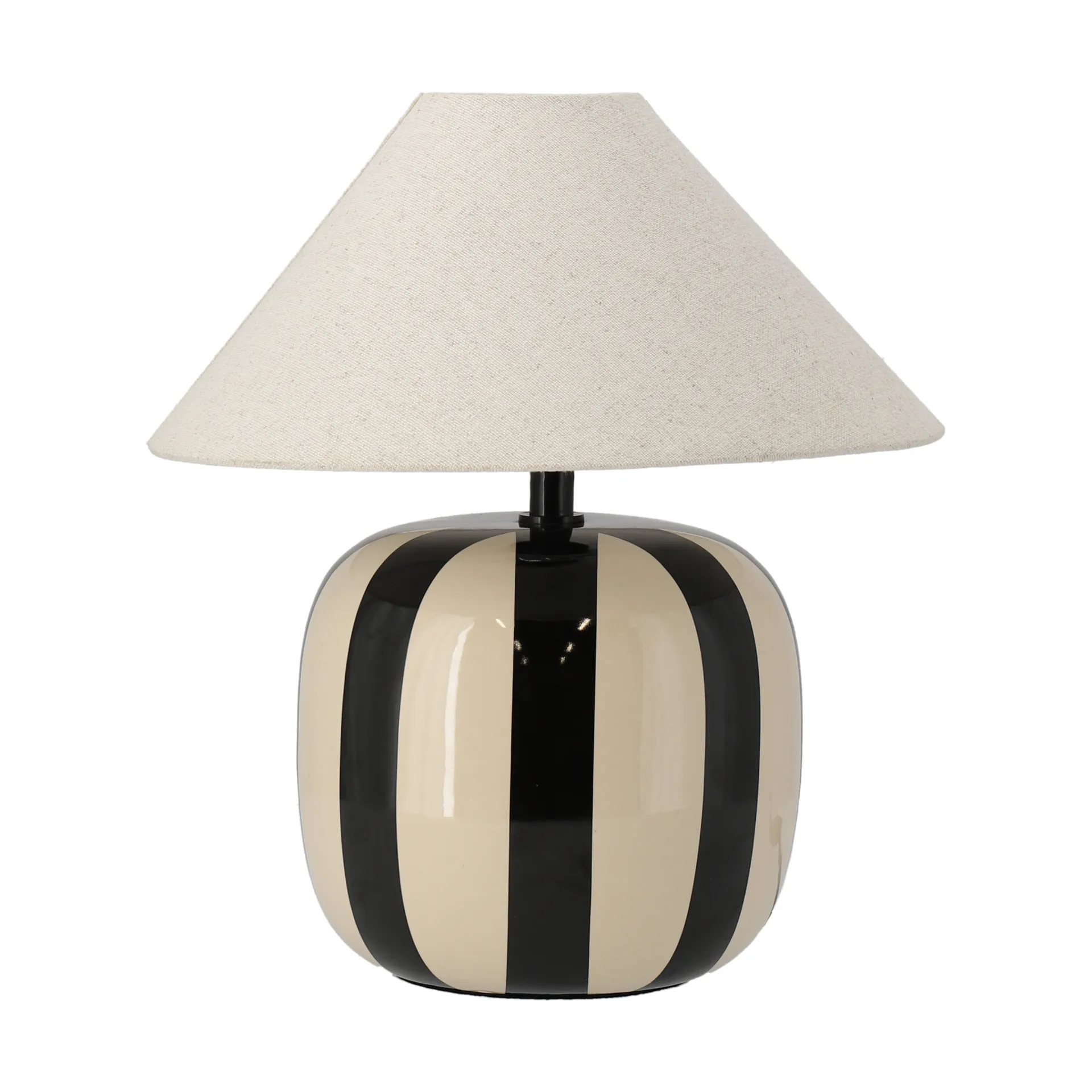
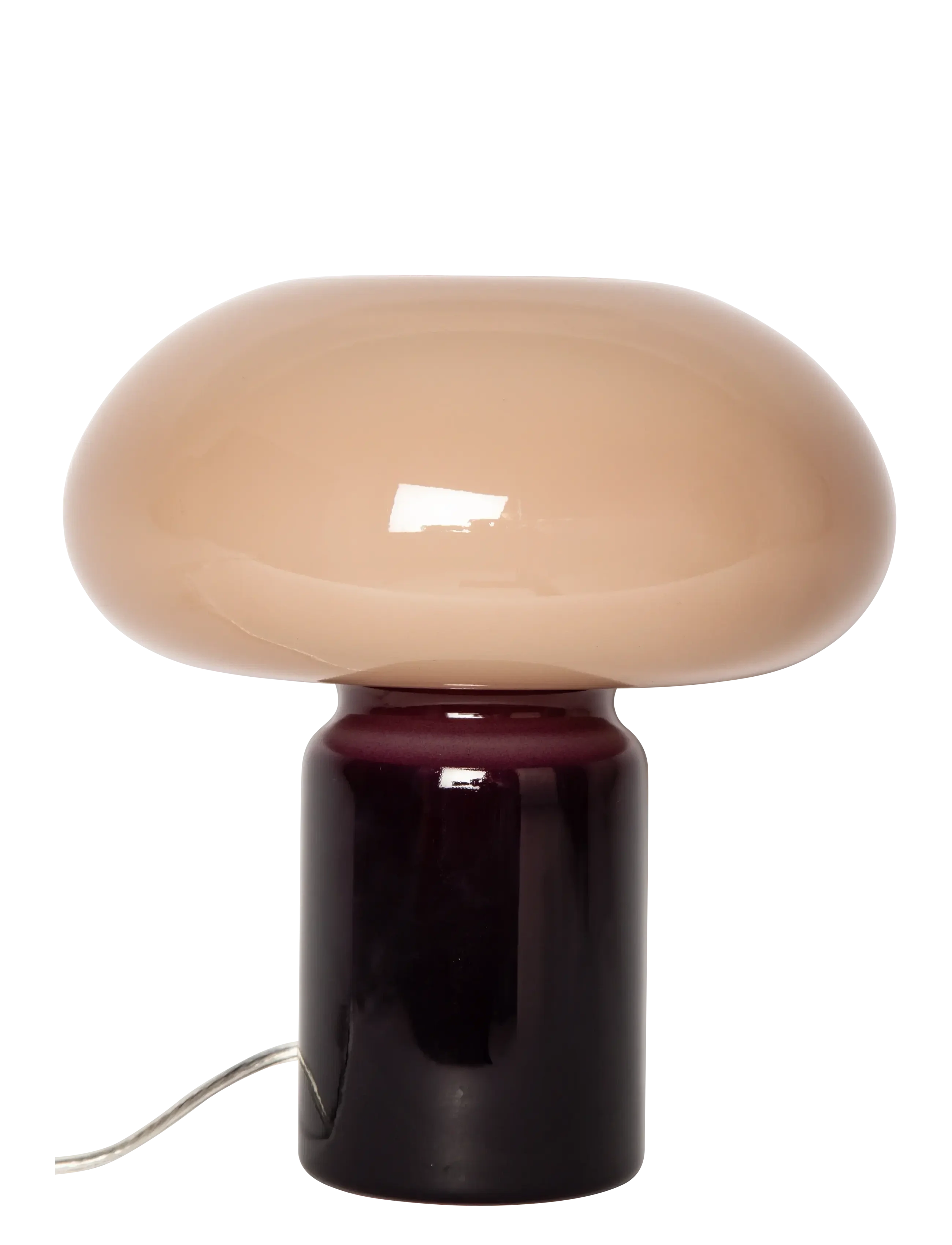
4. Mood light — small, low, warm light sources that exist purely to create atmosphere: a table lamp on a sideboard, a candle, a string of bulbs in a window.
A useful rule of thumb: aim for 5–7 separate light sources per room, and put as many as possible on dimmers. One overhead pendant on a single switch is almost never enough.
A Few Principles That Make Everything Easier
- Vary the heights. Eye-level, above eye-level, below eye-level. Lights all at the same height kill atmosphere.
- Go warm. 2700K is the safe default for living spaces. Reserve cool, bluish light (4000K+) for bathrooms and workshops.
- Dim everything you can. A dimmer is the cheapest upgrade you can make to any room.
Three Rooms, Three examples
Living Room
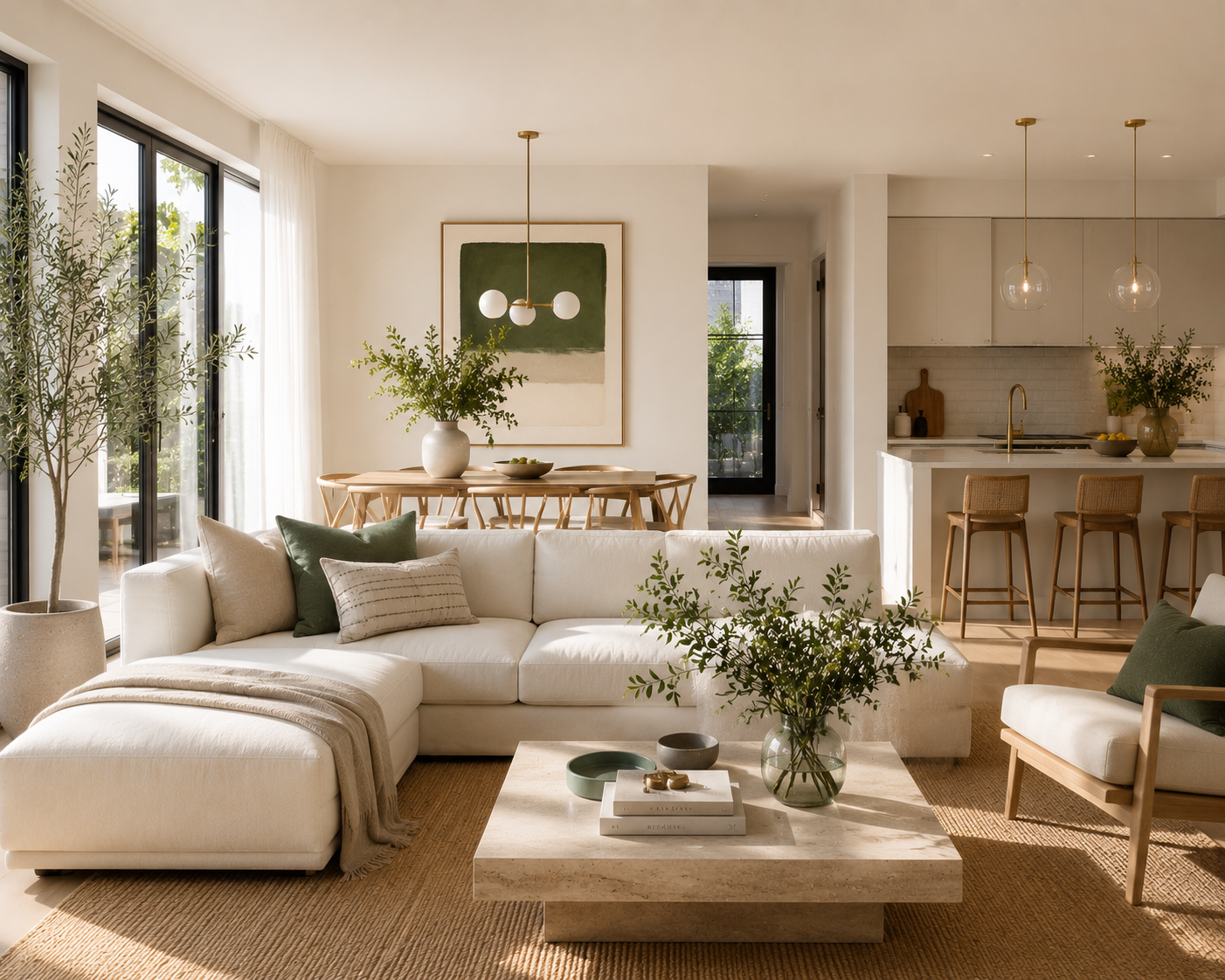
The living room is the trickiest room to light because it has the most jobs: lounging, reading, hosting, watching TV, sometimes working. A single ceiling lamp can't serve all of those, so don't ask it to.
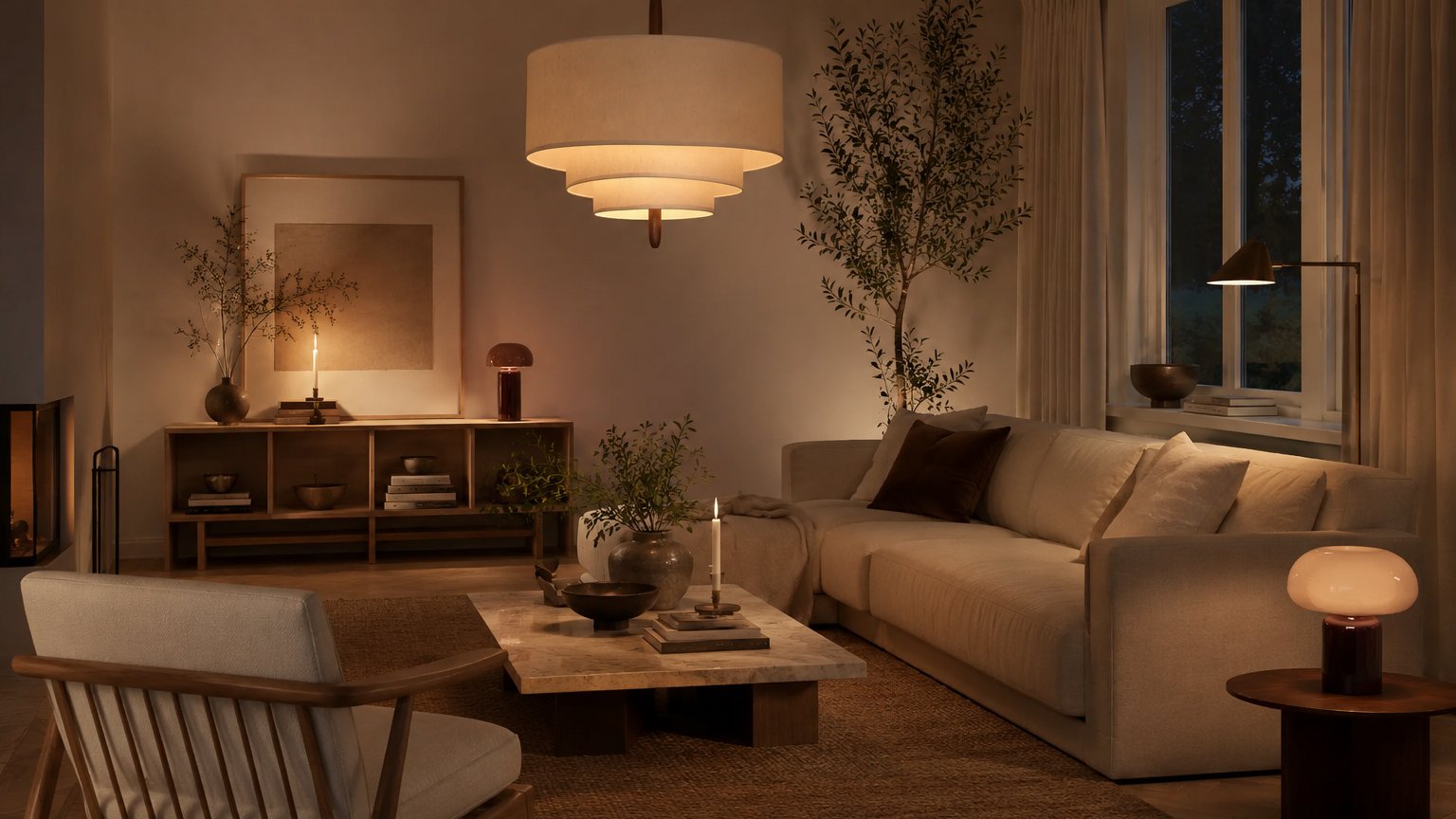
A workable plan:
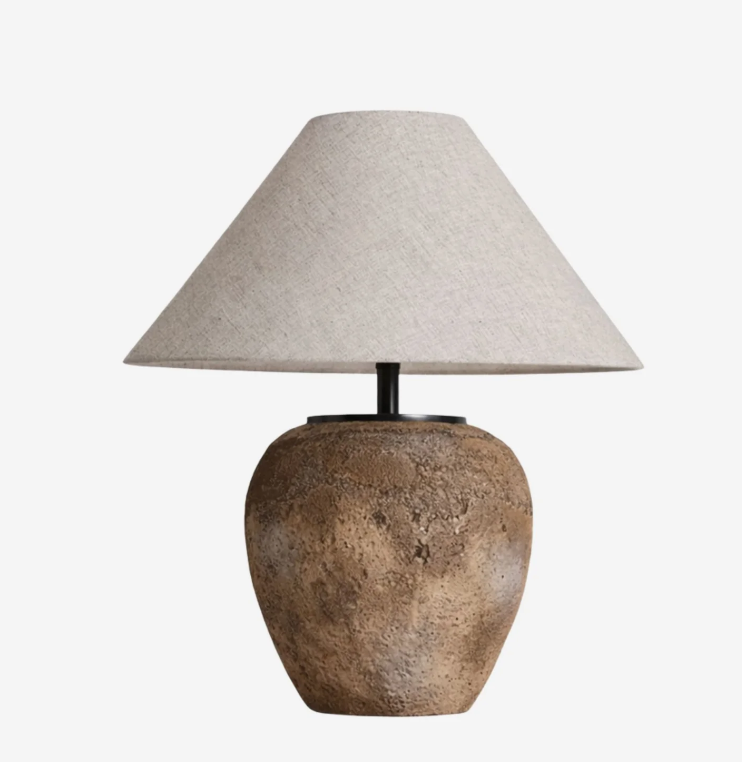
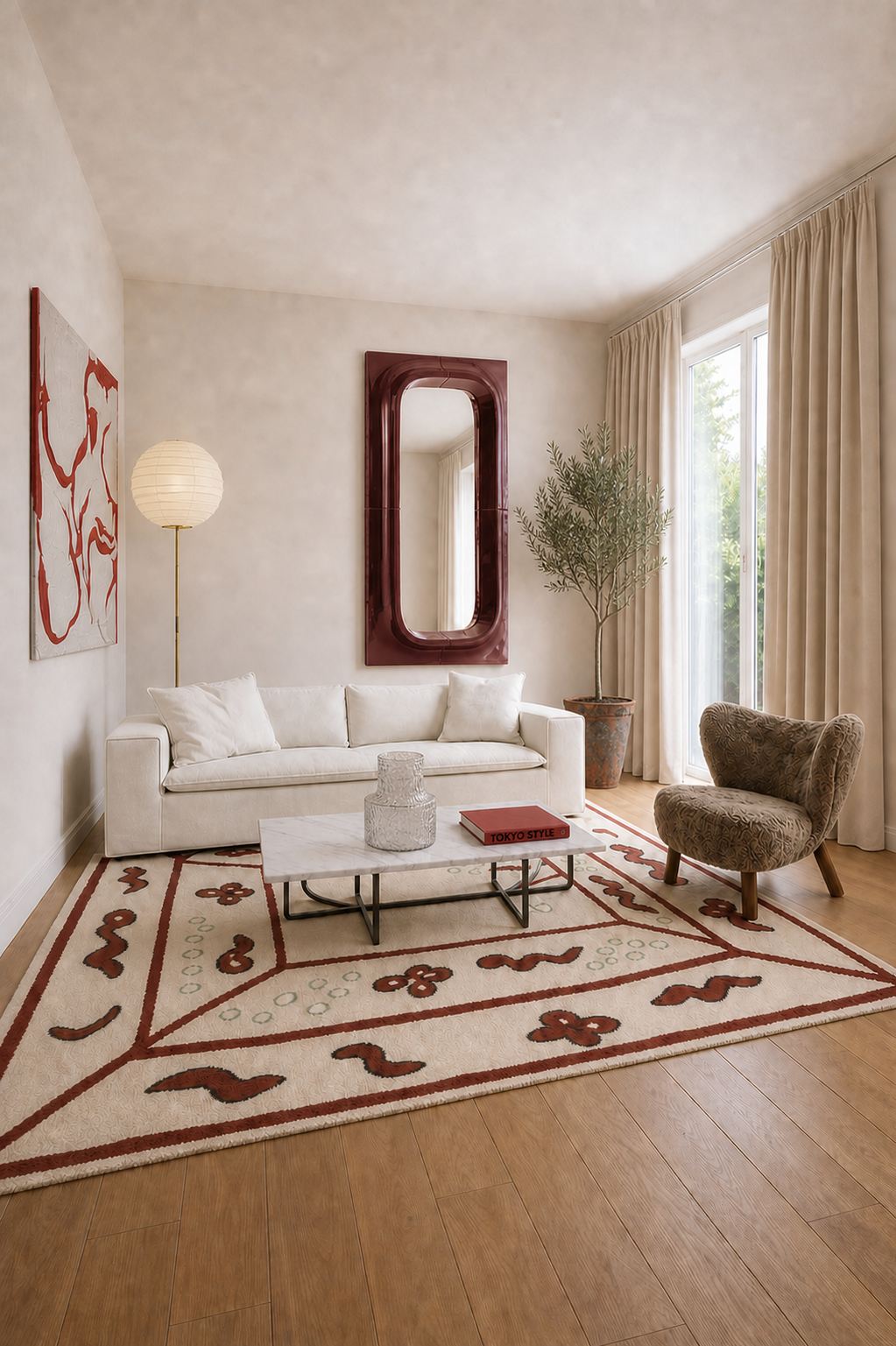
- Sofa zone: a tall floor lamp behind or beside the sofa for reading, plus a small table lamp on the side table for ambient warmth.
- TV zone: avoid bright lamps directly behind you facing the screen — they'll reflect. A low-wattage warm light behind the TV (bias lighting) reduces eye strain in the evening.
- Coffee table: something low — a small lamp, a candle cluster — to anchor the center of the room at a lower height.
- A wall or shelf: one accent. A picture light on art, or a spotlight on a bookshelf. This is the layer people forget, and it's the one that makes the room feel curated rather than just furnished.
- Ceiling: keep it dim, or skip it entirely once the sun goes down. End state: 5–6 sources, all warm, most dimmable. The room can go from "bright weekday dinner" to "Friday night movie" with two adjustments.
Bedroom
The bedroom has one rule the living room doesn't: nothing should ever feel clinical. You're winding down here.
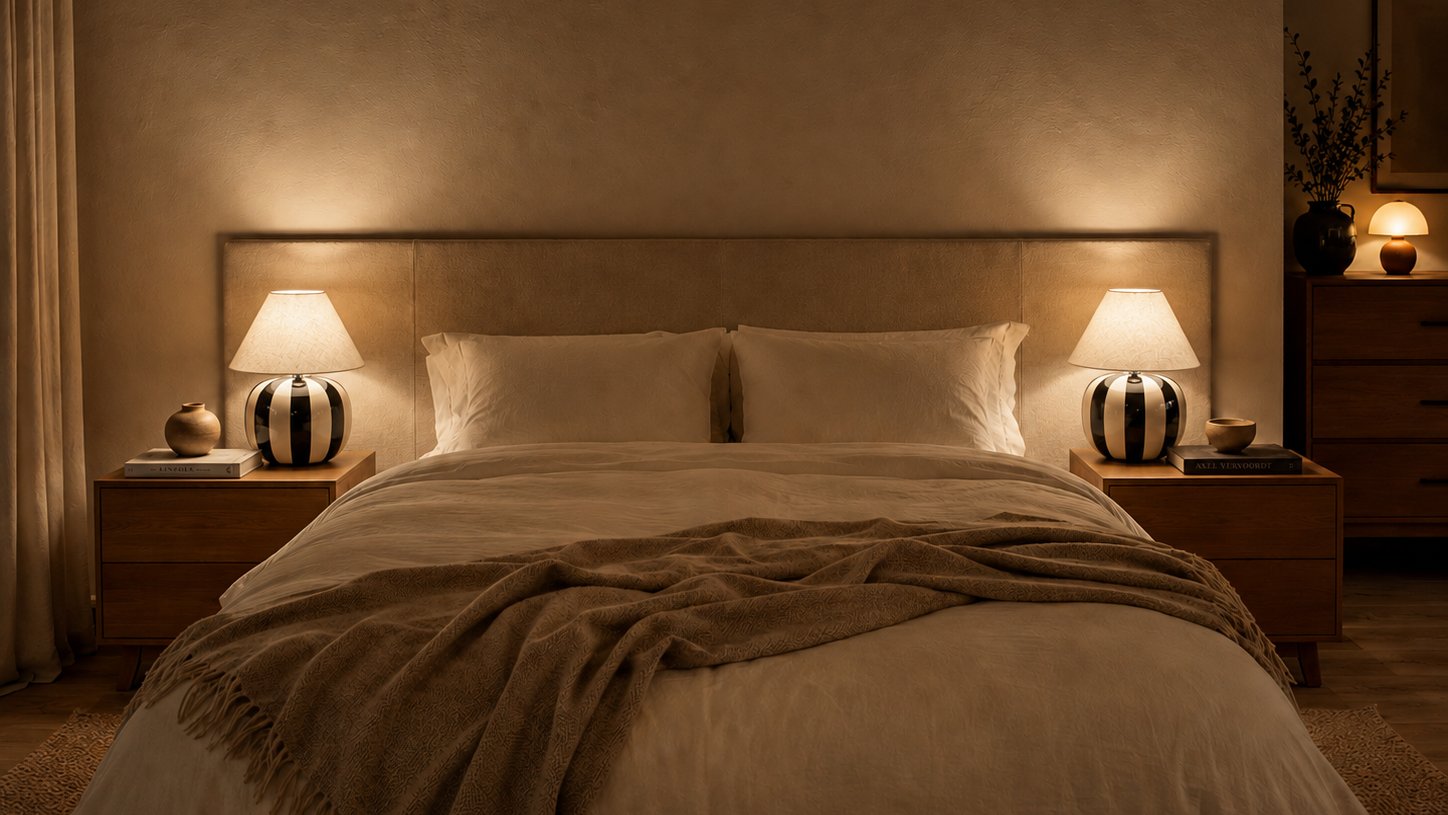
- Overhead: if there's a ceiling light at all, put it on a dimmer and bias it warm (2700K or warmer). Many people skip the overhead entirely after dark and don't miss it.
- Bedside: two reading lamps — ideally matched, ideally with shades that direct light onto the book, not at your partner's face. Asymmetric warm pools of light on each side of the bed do more for the room than almost any other decision.
- Closet or wardrobe: internal LED strips. Trivial to install, instantly upgrades getting dressed.
- One mood source: a small warm lamp on a dresser, or a corner floor lamp. Use this one when you're getting into bed and the bedside lamps already feel like too much. Color temperature matters more here than anywhere else — go as warm as you tolerate, 2200–2700K.
Hallway / Entryway
Hallways are usually the worst-lit room in the home: one bright cold ceiling light, harsh shadows on faces, nothing flattering. They deserve more thought because they're the first impression of the home — both for guests and for you coming home.
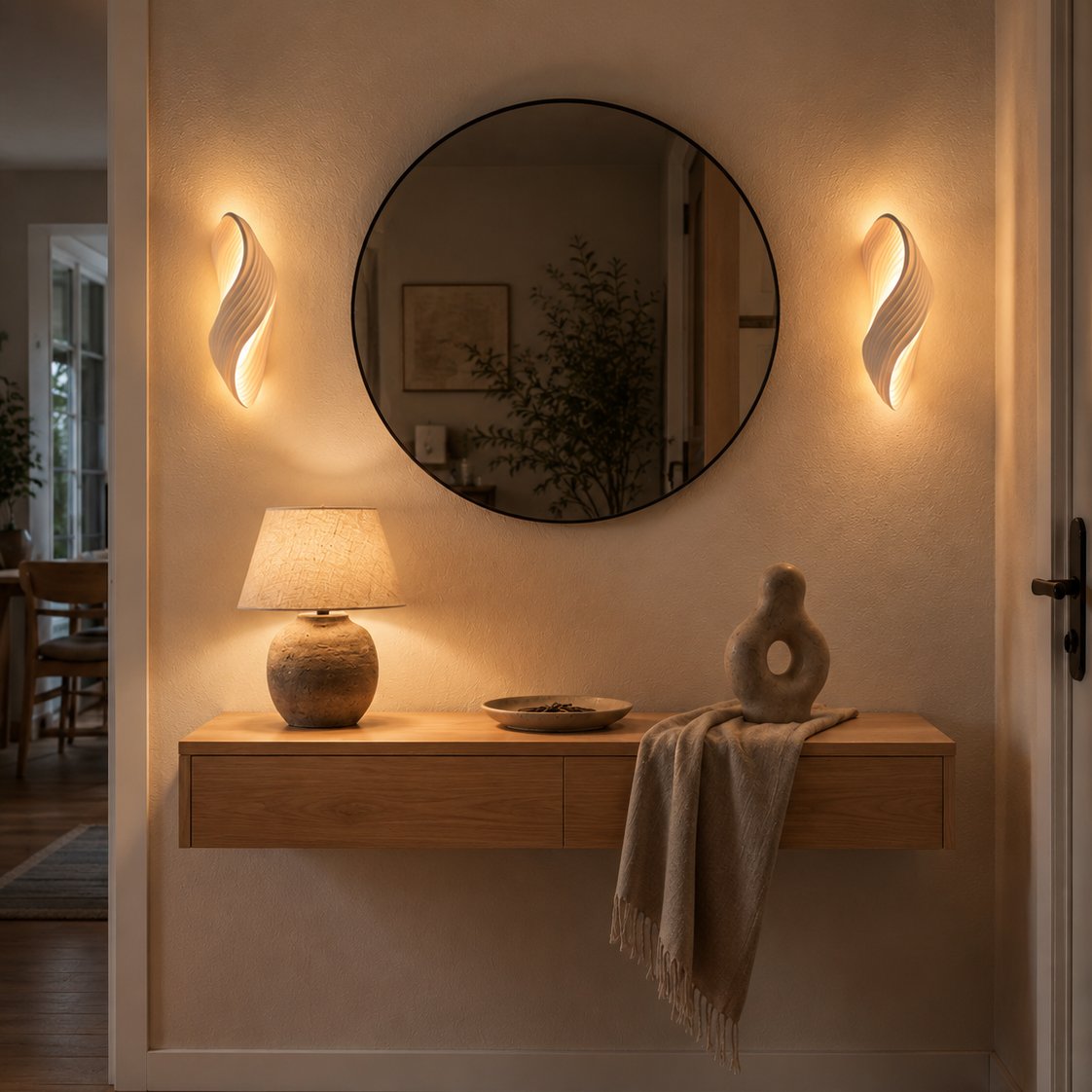
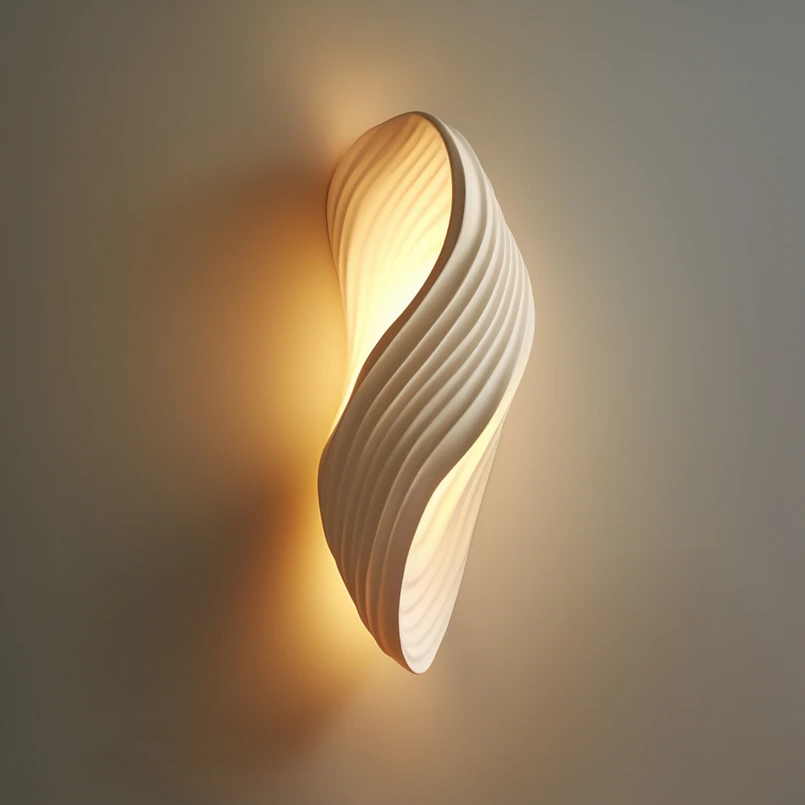
- Skip the single overhead as the main solution if you can. A pair of wall sconces — especially flanking a mirror — gives even, face-friendly light with no harsh shadows.
- Console lamp. If there's space for a console table or shelf by the door, a small warm table lamp does enormous work. It's the lamp you leave on when you go out, so you come home to a warm home instead of a dark one.
- At the mirror. Use a high-CRI (90+) bulb here. This is the one place in the home where you genuinely need to see your face accurately.
- Long hallway? A row of evenly-spaced spots or small pendants beats one big central light every time.
A Quick Checklist Before You're Done
- Count your light sources. Under 4? Add one.
- Turn off the ceiling light and see if the room still works. If it goes dark, you're too dependent on the ceiling.
- Look at where the lights sit. Are they all at the same height? Move one.
- Are they warm? If a bulb feels blue, replace it. It's the fastest upgrade in your home. Good lighting isn't about having beautiful lamps — it's about having the right number of them, in the right places, at the right warmth. Get those three things right and almost any room will feel intentional.